Why do they adopt an error-hunting mindset?
Why do they adopt an error-hunting mindset?
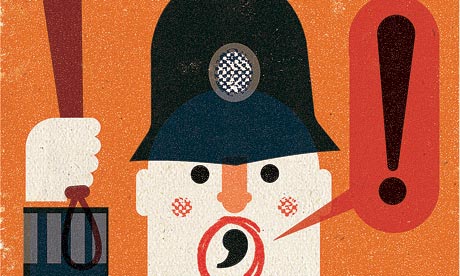
‘The debate about how far language ought to be allowed to evolve is an old one.’ Illustration: Adam Howling for the Guardian
Think of the word “atrocity”, and certain appalling behaviours spring to mind. Add “barbaric”, and the picture gets worse. How about a barbaric atrocity that’s “detestable” and provokes “horror”? At this point, it’s surely time for a UN intervention. We must act to halt this outrage! Except that all the words just quoted come from discussions of the uses and abuses of English. Simon Heffer, in his recent book Strictly English, thinks the so-called “greengrocer’s apostrophe” is an atrocity, and that academics write barbarically; William Zinsser’s guidebook On Writing Well also condemns some usages as atrocities, and others as detestable. Meanwhile, contributors to a BBC debate on Americanisms earlier this year spoke of their “horror” and “hate” in reaction to phrases that made them “feel the rage rising”. The debate about how far language ought to be allowed to evolve is an old one. But all this fury raises a more specific psychological question: what are people so angry about?